Golden Gate Bridge

Chandan Singh
| 07-01-2026
 · Travel team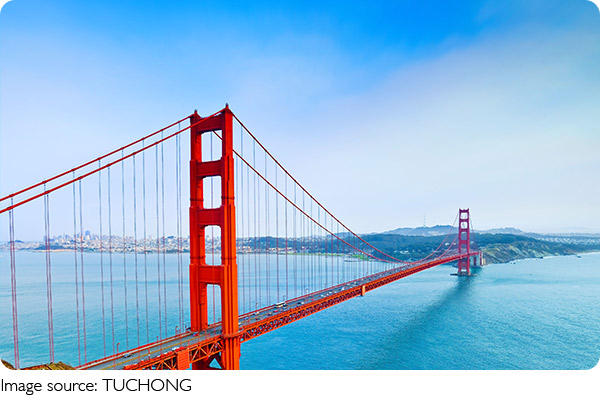
San Francisco’s Golden Gate Bridge is more than just a bridge—it’s an iconic symbol of California and a must-visit destination for travelers from around the world.
Lykkers, whether we are here for photography, cycling, or simply enjoying the views, knowing the practical details will make our visit smoother and more enjoyable. Let’s explore everything we need to plan a perfect trip.
Location and Access
The Golden Gate Bridge spans the Golden Gate Strait, connecting the northern tip of San Francisco to Marin County. Its south end meets San Francisco, while the north end leads to scenic Marin. We can access the bridge by car, bike, or public transport. From downtown San Francisco, buses 28 and 30 stop near the south parking area. If we drive, parking is available at both ends but limited, so arriving early is recommended.
Bridge Fees and Toll Information
For drivers heading south into San Francisco, a toll is required. The standard cashless toll is $8. Using the FasTrak electronic system, the toll drops to $7, and during peak hours with carpooling it can be as low as $5. Northbound traffic from San Francisco is free. Pedestrians and cyclists do not need to pay any fees to cross, making it ideal for walking tours or bike rides.
Opening Hours and Best Visiting Times
The Golden Gate Bridge is accessible to visitors year‑round, but pedestrian access on the east sidewalk is limited to daylight hours: from about 5:00 a.m. to 6:30 p.m. in standard time (winter) and 5:00 a.m. to 9:00 p.m. in daylight‑saving time (summer), with automatic gates that close outside those hours. Cyclists have 24‑hour access to the bridge sidewalks, though they may need to press a buzzer after hours for remote gate opening and must follow the current sidewalk schedule for east or west sidewalk use.
Walking and Cycling Across the Bridge
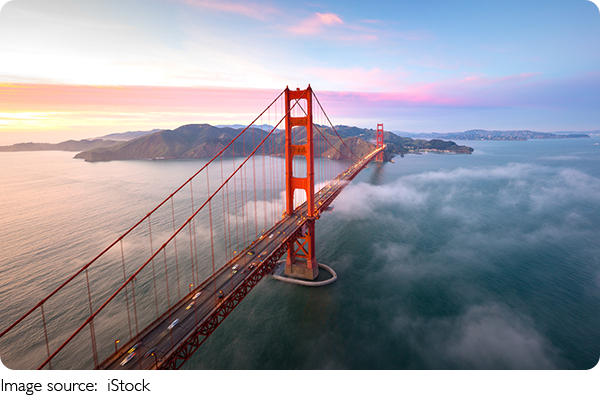
The bridge is 2,737 meters (8,980 feet) long and 27 meters (90 feet) wide. It has six lanes for vehicles and separate paths for pedestrians and cyclists. Walking across takes about 30–60 minutes depending on pace, while cycling can be faster. We can rent bikes in San Francisco or Marin; guided bike tours often include information about the bridge’s history and engineering highlights.
Scenic Viewpoints
Crissy Field, just south of the bridge, offers a close-up view of the cables and towers. For panoramic shots, the Marin Headlands on the north side provide sweeping views of San Francisco Bay and the Pacific Ocean. Battery Spencer, located in the Headlands, is another popular viewpoint for sunrise photography. Lykkers, carrying a camera is highly recommended because every angle is picture-perfect.
Historical and Engineering Highlights
Designed by engineer Joseph Strauss in 1917 and completed in 1937, the bridge was the longest suspension bridge in the world at that time, with a main span of 1,280 meters (4,200 feet) and a total height of 227 meters (746 feet). It remains a marvel of engineering and an enduring symbol of innovation. Walking or cycling across allows us to appreciate the scale and craftsmanship up close.
Additional Tips for Travelers
- Clothing: The weather can be chilly and windy, even in summer. Layers are recommended.
- Parking: Limited on-site; consider public transportation or early arrival.
- Facilities: Restrooms are available at visitor areas but limited along the bridge.
- Safety: Stay on designated pedestrian or cycling paths; the bridge has high winds at times.
- Nearby Attractions: We can visit Fort Point at the south end for historical exhibits, or explore Sausalito after crossing north.
Our Golden Gate Adventure
Visiting the Golden Gate Bridge is more than just a sightseeing stop—it’s an immersive experience. Lykkers, by planning our route, choosing the best time of day, and taking advantage of viewpoints and cycling options, we can fully enjoy one of the world’s most iconic landmarks. Let’s make this adventure unforgettable and capture memories that will last a lifetime!
Golden Gate Bridge - San Francisco, USA 🇺🇸 - by drone [4K]
Video by Drone Snap